

Chicken Road Scam Check for Australians
No fear tactics, no fake certainty—just a practical safety framework to avoid risky operators and misleading claims.
Quick answer: is Chicken Road a scam?
Chicken Road as a game format is not automatically a scam. The real risk usually comes from where you play it. Safety depends on operator behaviour: terms clarity, support quality, account controls, and transparent withdrawal workflows.
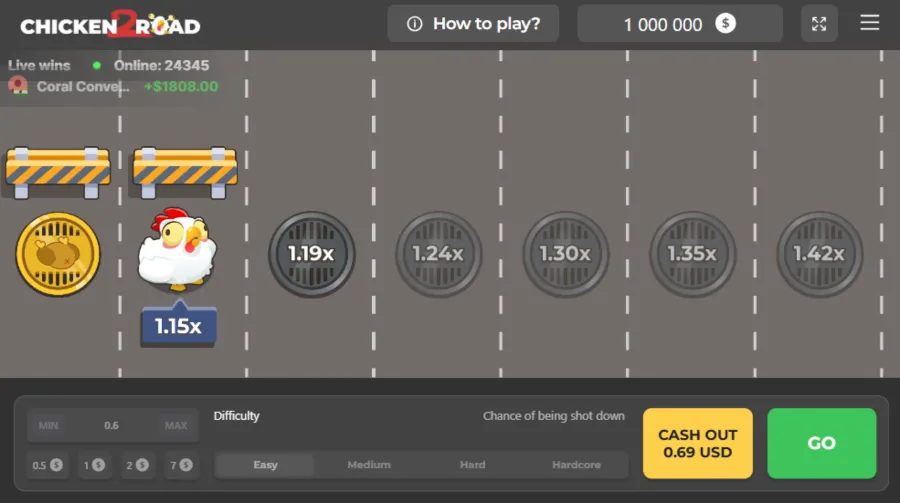
So the right question is not “is the game a scam?” It is “is this operator trustworthy enough to use?”
Green flags that usually indicate safer play
- Clear terms for bonuses, wagering, and withdrawals.
- Visible support channels with specific responses.
- Responsible-gambling tools that are easy to access.
- Consistent account verification flow before withdrawals.





Red flags that need immediate caution
| Red flag | Why it matters | What to do |
|---|---|---|
| Vague bonus conditions | Hidden restrictions can block withdrawals | Do not deposit until terms are clear |
| Support avoids direct answers | Poor accountability signal | Test support before funding |
| No clear RG tools | Weak player-protection posture | Choose another operator |
| Pressure-heavy marketing language | High-risk conversion behaviour | Step back and re-check trust signals |
5-step verification routine before you play
- Read bonus and withdrawal terms fully.
- Ask support one specific withdrawal question.
- Confirm available account limits and timeout options.
- Start with minimal exposure, not maximum bonus size.
- Log all key terms for your own records.
Australian context and legal caution
Australia applies strict controls around online gambling activity and advertising environments. Regulatory interpretation can vary by context and can change over time.
This page is practical guidance, not legal advice. Always verify current legal and operator information before taking action.
18+ only. If gambling stops being manageable, call Gambling Help on 1800 858 858 or visit gamblinghelponline.org.au.
Australian safety feedback
Short notes from players who applied this scam-check process.
"Checking support before deposit saved me from signing up with a poor operator."
"The red-flag table was useful. I spotted vague terms straight away."
"Simple checklist, no hype. Exactly what I needed before first deposit."
Scam-check FAQ
Practical safety questions answered clearly.
The bigger risk is usually the operator environment, not the game concept itself.
Read withdrawal terms and test support with one direct question before depositing.
Not by default, but they require careful term checks before you opt in.
Start in demo mode, then use a small first deposit only after trust verification.
Gambling Help 1800 858 858 and gamblinghelponline.org.au.
The Interactive Gambling Act 2001 and what it means for you
Australia regulates online gambling primarily through the Interactive Gambling Act 2001 (IGA), administered and enforced by the Australian Communications and Media Authority (ACMA). The law targets operators rather than individual players, but understanding the framework helps you make informed decisions.
| IGA element | What it covers | Practical impact for players |
|---|---|---|
| Prohibited services | Interactive gambling services offered to Australians without authorisation | Some offshore operators may not comply with AU standards |
| ACMA enforcement | Website blocking, fines, ISP-level restrictions | Blocked sites may reappear under new domains — treat domain changes as a red flag |
| Player protections | Operators must offer responsible gambling tools | If an operator has no visible RG controls, that is a serious warning sign |
| Advertising rules | Strict rules on gambling promotion in Australia | Heavy promotional pressure from an operator may signal non-compliance |
The IGA does not make it illegal for Australian individuals to gamble online. However, operators serving Australians must comply with specific standards. When an operator ignores these standards, your practical risk increases — not because of a legal penalty to you, but because of weaker protections, slower dispute resolution, and less accountability.
Always check whether an operator has been flagged or blocked by ACMA. A quick search on the ACMA website can reveal enforcement actions that banner promotions will never mention.
Crash-game-specific scam patterns to recognise
Crash games like Chicken Road attract a specific set of misleading claims. Knowing these patterns helps you filter noise from genuine risk signals.
Pattern 1: "Guaranteed multiplier" bots or tools
Social media accounts promote software that supposedly predicts crash points. Chicken Road uses provably fair algorithms — outcomes are determined before the round starts and cannot be predicted by external tools. Any product claiming otherwise is a scam.
Pattern 2: Fake community tip groups
Telegram or Discord groups charge membership fees for "insider" crash game tips. Crash outcomes are random. Past multiplier data does not predict future rounds. Paid tip services exploit the gambler's fallacy.
Pattern 3: Clone operator sites
Fake sites copy the appearance of legitimate operators, including Chicken Road branding. Check the URL carefully. Verify through your usual trusted access route, not links received via social media or email.
Pattern 4: Withdrawal delay excuses
Legitimate operators process verified withdrawals within their stated timeframe. Repeated "technical delays" or unexplained holds beyond the advertised processing window indicate operational problems — or worse.
| Scam pattern | Frequency | Risk level | Your response |
|---|---|---|---|
| Multiplier prediction tools | Common on social media | High — financial loss + data theft | Ignore completely, report if possible |
| Paid tip groups | Common on Telegram | Medium — membership fee wasted | Do not join, block promoters |
| Clone operator sites | Moderate | Critical — full account theft risk | Always verify URL before logging in |
| Withdrawal stalling | Occasional | High — trapped funds | Test with small withdrawal first |
Account security practices for Australian players
Beyond operator trust, your own account hygiene directly affects safety. Crash games involve real money and personal data — treat access security as non-negotiable.
- Unique password: use a strong, unique password for each operator account. Password reuse is the fastest route to account compromise.
- Two-factor authentication: enable 2FA where available. Even a compromised password cannot breach a 2FA-protected account.
- Verify withdrawal routes: confirm your withdrawal method before depositing large amounts. Test with a small withdrawal (A$20-A$50) to ensure the process works.
- Monitor statements: check your bank or payment account for unauthorised charges linked to gambling accounts.
- Trusted access only: bookmark operator URLs directly. Do not follow links from social media, emails, or unsolicited messages.
If you suspect account compromise or detect unauthorised transactions, contact the operator support immediately and notify your bank. Australian banks can assist with disputed gambling transactions under consumer protection guidelines.
More Australian safety feedback
Additional notes from players who tested safety protocols before and after depositing.
"Someone in a Telegram group tried to sell me a ‘multiplier bot’ for A$200. This page confirmed what I suspected — total scam. Saved me money and embarrassment."
"The small-withdrawal test is brilliant advice. Found out one operator took 9 days to process A$30 — moved to a faster option before depositing more."
"ACMA blocking list was new to me. Checked it and found two sites I had been considering were already on there. Dodged a real problem."
Fake Chicken Road apps: how to identify them
Search for "Chicken Road" on the App Store or Google Play and you may find apps claiming to be the official game. Most are unauthorized clones that either steal your data, load malware, or simulate rigged gameplay to push deposits to scam operators.
Red flags for fake apps
| Indicator | Legitimate access | Fake app |
|---|---|---|
| Publisher name | Known operator or Turbo Games | Unknown developer, often with typos |
| Download count | Usually higher or operator-branded | Under 1,000 downloads, recent upload |
| Reviews | Mixed, realistic | All 5-star or all 1-star, generic text |
| Permissions requested | Camera (for KYC), storage | Contacts, SMS, call logs — unnecessary for a game |
| In-app deposits | Routes to verified operator payment page | Asks for card details directly in the app |
| Gameplay consistency | Matches web version exactly | Different interface, different mechanics |
The safest approach for Australian players: do not download Chicken Road from app stores at all. Use operator mobile websites or PWA shortcuts. The official Chicken Road game by Turbo Games is delivered through licensed operator platforms, not standalone app downloads.
If you have already installed a suspicious app, uninstall it immediately, change any passwords you entered, and monitor your bank statements for unauthorised transactions.
ACMA enforcement: what blocking means and how to check
The Australian Communications and Media Authority (ACMA) enforces the Interactive Gambling Act 2001. When ACMA determines an operator is providing prohibited services to Australians, it can request ISPs to block the operator's domain.
How ACMA blocking works
- ACMA investigates an operator (often after complaints or proactive monitoring).
- If the operator is found to provide prohibited interactive gambling services, ACMA adds the domain to its blocked list.
- Australian ISPs (Telstra, Optus, Vodafone, TPG, etc.) implement DNS-level blocks.
- The operator's website becomes inaccessible from standard Australian internet connections.
What ACMA blocking tells you
| Scenario | What it means | Your action |
|---|---|---|
| Operator is on ACMA blocked list | ACMA determined it provides prohibited services | Do not use this operator under any circumstances |
| Operator is not on ACMA blocked list | Not investigated or not found in violation (yet) | Still requires your own due diligence |
| Operator was previously blocked, now on a new domain | Likely the same prohibited operator under a new name | Avoid — domain migration after ACMA blocking is a critical red flag |
You can check ACMA's blocked services list on the ACMA website. Search for the operator name or domain. This takes under two minutes and should be part of your pre-deposit verification routine for any new operator.
Important: an operator not being on the ACMA blocked list does not mean it is ACMA-approved or licensed for Australia. ACMA operates reactively — many offshore operators have not been investigated. Absence from the blocked list is not an endorsement.
Extended red flags checklist for Australian players
Use this checklist before depositing at any operator. Three or more red flags from this list should disqualify the operator entirely.
| Category | Red flag | Why it matters | Severity |
|---|---|---|---|
| Licensing | No licence information visible on the site | Unaccountable operator | Critical |
| Licensing | Operator on ACMA blocked list | Australian regulator has acted against them | Critical |
| Licensing | Domain changed recently after a block | Evading enforcement | Critical |
| Terms | Wagering requirements not clearly stated | Hidden costs on bonuses | High |
| Terms | No max bet limit published during wagering | Risk of bonus voiding with no warning | High |
| Payments | No AUD support — forced EUR/USD conversion | Currency conversion costs on every transaction | Medium |
| Payments | Withdrawal takes over 7 days consistently | Cash flow risk, potential withholding | High |
| Support | Only email support, no live chat | Cannot resolve urgent issues quickly | Medium |
| Support | Scripted responses that do not answer your question | Understaffed or untrained team | Medium |
| RG tools | No deposit limits or self-exclusion options | Operator not invested in player safety | High |
| Marketing | "Guaranteed" returns or "no-risk" claims | Fundamentally dishonest about gambling | High |
| Marketing | Aggressive re-engagement after you set limits | Disrespects your safety boundaries | High |
Print this checklist or screenshot it. Run through it before every new operator. The 5 minutes this takes can prevent months of frustration with locked funds, delayed withdrawals, or worse.
18+ only. If you have been affected by a gambling scam, contact Gambling Help on 1800 858 858. They can assist with financial counselling and refer you to appropriate support services.
Dispute resolution for Australian players at offshore operators
When a dispute arises — delayed withdrawal, voided bonus, or account restriction — Australian players have fewer escalation options than those in fully regulated markets. Understanding your options beforehand prevents panic decisions.
Step 1: Direct operator communication
Start with the operator's live chat or email support. Document everything: screenshot conversations, note timestamps, save email threads. Be specific about the issue — "my withdrawal of A$150 requested on 15 March has not arrived after 7 business days" is actionable. "I want my money" is not.
Step 2: Escalate to the operator's complaints procedure
Most operators licensed in Curaçao, Malta, or Gibraltar have a formal complaints process described in their terms. Request escalation to a senior team or complaints officer. Reference the specific term you believe was violated.
Step 3: Contact the licensing authority
If the operator holds a Curaçao licence (most common for AU-facing sites), file a complaint with the Curaçao Gaming Control Board. If Malta Gaming Authority (MGA), use their online complaints form. Response times vary — MGA tends to respond within 4-6 weeks. Curaçao can take longer.
Step 4: Third-party mediation
Independent mediation platforms like AskGamblers, Casino Guru, and ThePogg handle player-operator disputes. These platforms have direct relationships with operators and can sometimes resolve issues faster than licensing authorities.
| Escalation level | Time to resolution | Success rate | Best for |
|---|---|---|---|
| Direct operator support | 24-72 hours | High (for legitimate issues) | Simple delays, technical errors |
| Operator complaints team | 1-2 weeks | Medium-high | Disputed terms, voided bonuses |
| Licensing authority | 4-8 weeks | Medium | Unresponsive operators, large sums |
| Third-party mediation | 2-6 weeks | Medium-high | Operators that ignore direct complaints |
Preventive measure: always test with a small withdrawal (A$20-A$50) before committing larger amounts. If the small withdrawal processes smoothly, the operator's payment infrastructure works for your account. If it fails, you have limited your loss to A$50 rather than A$500.
Protecting your identity and financial data
Registering at an online casino requires personal data: full name, date of birth, address, and often government ID. Here is how to minimise your risk exposure.
- Use a dedicated email: create a separate email address for gambling accounts. If one operator is compromised, your primary email remains safe.
- Unique passwords per operator: use a password manager to generate and store unique 16+ character passwords. Password reuse across gambling sites is the number one cause of multi-account compromise.
- Enable 2FA everywhere: two-factor authentication (SMS or authenticator app) blocks access even if your password leaks. SMS-based 2FA is better than nothing; authenticator-app 2FA is stronger.
- Monitor your bank statements: check weekly for unexpected charges linked to gambling platforms. Report any unauthorised transactions to your bank within 48 hours for best recovery chances.
- Be careful with KYC documents: when uploading ID for verification, ensure you are on the legitimate operator URL (check the SSL certificate). Some clone sites collect identity documents for fraud purposes.
- Limit stored payment methods: remove saved card details after transactions. Do not leave payment details stored on operator sites unless you actively need the convenience.
If you suspect your data has been compromised through a gambling site, take immediate action: change passwords on all accounts using the same email, contact your bank to flag potential fraud, and consider placing a credit alert with Equifax or Illion (Australian credit bureaus).
How to report gambling scams in Australia
If you encounter a scam operator, prediction bot, or fraudulent gambling service, reporting it helps protect other Australian players and supports enforcement action.
| Type of report | Where to report | What to include | Expected outcome |
|---|---|---|---|
| Illegal gambling service | ACMA (acma.gov.au complaints form) | Website URL, screenshots of the service, dates accessed | ACMA may investigate and add to blocked list |
| Online scam or fraud | Scamwatch (scamwatch.gov.au) | Scam type, how you were contacted, financial loss if any | Added to ACCC scam awareness database |
| Fake app on App Store / Play Store | Apple or Google — report directly through the store | App name, developer name, why you believe it is fraudulent | App reviewed and potentially removed |
| Social media scam accounts | Platform report function (Instagram, TikTok, Telegram) | Account link, type of scam activity | Account reviewed and potentially suspended |
| Unauthorised financial transactions | Your bank + police (report via ReportCyber at cyber.gov.au) | Transaction details, account information, timeline | Bank investigation initiated, potential chargeback |
Reporting takes 5-10 minutes per incident. While individual reports may not produce immediate results, ACMA and ACCC use complaint volumes to prioritise enforcement targets. The more Australians report a specific scam operator or service, the faster it moves up the enforcement queue.
Keep records of your report: confirmation numbers, reference IDs, and screenshots. If a financial dispute escalates, these records support your case with the bank or ombudsman.

Social media scams targeting Australian crash game players
Social media platforms are the primary distribution channel for crash game scams. The scams vary in sophistication but follow consistent patterns.
Instagram and TikTok "win proof" accounts
Accounts post screenshots or screen recordings of large wins (x50+, x100+). These are either edited, taken from demo mode (where balances are virtual), or genuine but cherry-picked from thousands of rounds. The accounts then link to affiliate registration pages or charge for "signal groups".
Telegram signal groups
Groups charge A$50-A$500 for membership, claiming to provide real-time crash predictions. Chicken Road's crash points are determined by a provably fair algorithm before each round begins. No external tool, signal, or human prediction can anticipate them. These groups are 100% scam.
YouTube "strategy reveal" channels
Videos demonstrate strategies that appear to work using demo mode footage, then link to specific operator registration with affiliate codes. The strategy shown is not inherently wrong — many demo sessions look profitable due to variance. The deception is implying that short demo footage represents consistent real-money results.
Facebook Marketplace and Gumtree listings
Listings offer "verified casino accounts" or "pre-loaded bonus accounts" for sale. Buying another person's gambling account violates every operator's terms and exposes you to identity fraud. The accounts are typically stolen, and any deposited funds will be frozen during verification.